
Surinder Kapur's relentless pursuit of quality made Kapur a highly efficient manufacturer of automobile components.

The Centre on Wednesday scrapped the mandatory human safety tests for electric vehicle (EV) batteries required to qualify for incentives under various government schemes. The ministry of heavy industries, in its fresh guidelines, has made compliance with the ministry of road transport and highways (MoRTH's) prevailing EV battery testing standards the only requirement to get incentives under the Centre's various incentive schemes.

The BSA Gold Star is launched....Ola Enters e-motorbikes Biz... Bajaj, TVS To Enter e2Ws Market...

The finance ministry on Thursday sought to clarify that there was no distress in household savings and the data indicated that changing consumer preference for different financial products was the real reason for the change in the pattern of household savings. The clarification comes in the backdrop of Reserve Bank of India data showing that household net financial savings rate is at its lowest in decades, at 5.1 per cent of GDP in FY23 compared to 7.2 per cent of GDP in FY22. The divergence in the data for household gross financial assets and liabilities is not a cause for concern for the government, as the loans have largely been taken to buy real assets or automobiles, the finance ministry said.

Those involved in the discussions say the guidelines for selection of bidders in insolvency cases need to be transparent, otherwise anyone who loses out could take legal recourse, leading to wastage of time and derailing the whole process.

Based on discussions with stakeholders, the ministry is proposing to allocate Rs 26,400 crore for FAME-III subsidy alone with electric two wheelers getting around Rs 8,158 crore, electric buses Rs 9,600 crore and electric three-wheelers Rs 4,100 crore, according to sources in the know. Along with some other components like setting up an innovation fund and money for testing , the total allocation could cross Rs 33,000 crore, estimates suggest.

From toys, footwear and furniture to insulated flasks, smart meters, and air coolers - the Central government over the last decade has mandated higher standards for production and imports of such items. Sample this: Till 2014, there were 14 Quality Control Orders (QCOs) covering 106 products. By the latest count, there are 156 QCOs on 672 products.

RBI is expected to slash rates by 150 basis points till end-December 2016.
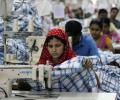
NITI Aayog wants the prime minister's flagship initiative should focus on labour-intensive sectors and policies that impede their growth to get special attention.

His plan revolves around new products, a renewed thrust on exports and some serious cost savings

The government hopes that the PLI schemes would provide 200,000-300,000 direct employment over five years, according to sources in the know.

The mission has proposed pilot projects for replacing fossil fuels and fossil fuel-based feedstocks with Green Hydrogen and its derivatives.
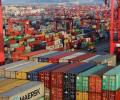
Indian exporters are keeping their fingers crossed on account of rising Covid infections in China and other countries as it could again disrupt supply chains and affect demand for goods. Federation of Indian Export Organisations (FIEO) director general Ajay Sahai said that if the cases continue to increase in the coming days, it may have implications on imports. "We are keeping our fingers crossed," he said.

The Auto Component Manufacturers Association of India on Wednesday sought reduction in GST rate to a uniform level of 18 per cent for the entire automobile industry to stimulate demand and help save around 10 lakh jobs, which are at risk due to prolonged slowdown in vehicle sales.

The government is likely to extend fiscal incentives for production of toys, bicycles and leather and footwear in the forthcoming budget as it looks to expand production linked incentive (PLI) scheme to cover more high-employment potential sectors, sources said. The government has already rolled out the scheme with an outlay of about Rs 2 lakh crore for as many as 14 sectors, including automobiles and auto components, white goods, pharma, textiles, food products, high efficiency solar PV modules, advance chemistry cell and speciality steel. The scheme aims to make domestic manufacturing globally competitive and create global champions in manufacturing, and it is yielding solid results, sources said.

The next edition of the country's leading automobile show, the Auto Expo, will be held from January 13-18 next year, having been cancelled this year due to the COVID-19 pandemic. The last edition of the biennial automobile show took place in February 2020 amid fears of the spread of the coronavirus across the world. It was supposed to take place in February this year at Greater Noida but was postponed due to the worsening COVID-19 situation.

After disappointing guidances in the first quarter (Apr-Jun) of the 2023-24 financial year (Q1FY24) and valuation downgrades, the Indian IT sector could see some positive repricing as the bad news for IT maybe easing in Q2FY24. A key negative factor was weaker demand from the US financial sector and from North America in general. The latest GDP (gross domestic product) estimates and sector-specific news suggest that the demand situation may not be quite so bad with a gradual recovery in tech spending in Q2.
India's production-linked incentive (PLI) scheme, which aims to make domestic manufacturing globally competitive, has attracted investment worth over Rs 45,000 crore and has also created three lakh jobs, NITI Aayog CEO Parameswaran Iyer said on Monday. The government has rolled out the scheme with an outlay of about Rs 2 lakh crore for as many as 14 sectors, including automobiles and auto components, white goods, pharma, textiles, food products, high efficiency solar PV modules, advanced chemistry cell and speciality steel. "The PLI programme has already started showing results.

According to exporters, withdrawal of incentives under GSP would impact India's export worth $5.6 billion to the US.

Tata Motors aims to address 95% of passenger vehicle market by 2020
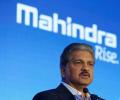
"I took some time to explore the contours of this initiative. I don't use the term 'game-changer' too often but it's apt in this case. For me, what's much more important than the mechanics of the scheme is the dramatic shift it signals in the attitude towards industry," Mahindra said in a tweet.

A vast majority of the business leaders believe that the Production Linked Incentive (PLI) schemes have been beneficial and expect an extension to other sectors in the coming years, a Deloitte Survey said on Friday. An overwhelming number of survey respondents hope the budget will fuel growth across industries by building strong domestic demand and focussing on capital expenditure and believe that it would define the 'Amrit Kaal'. "Critical to this growth will be the pace of capital expenditure, infrastructure development, and the need to boost infrastructure financing through private partnership. 60 per cent of respondents suggested raising funds through Indian Government Bonds," the survey said.

Companies in the micro, small and medium enterprises (MSME) sector may legally challenge the Haryana government's new law which mandates 75 per cent reservation of jobs in the private sector for locals. "We had earlier gone to the high court against this law, but the court said that it would hear the matter after the law was notified," said Manoj Tyagi, general secretary, IMT Industrial Association. Industries and associations feel that the law will not benefit the state and will hit MSMEs that are just coming out of the crippling effects of the lockdowns owing to the Covid-19 pandemic.

The recent sell-off in IT stocks such as Infosys and Tata Consultancy Services (TCS) has resulted in a sharp decline in the IT sector weighting in the Nifty50 index. The sector's weighting in the index has slipped to a five-year low of 12.2 per cent, down from the 17.7 per cent at the end of March 2022. The top IT companies - TCS, Infosys, Wipro, HCL Technologies, and Tech Mahindra - accounted for 13.6 per cent of the index at the end of March this year.

Automobile dealers' body FADA said the Budget lacked immediate demand boosters for the automobile industry.

And what if all this happened so fast and so extensively that we never quite had the opportunity to call the broker and say 'Sell'?

Tata Motors is looking at various measures, including direct buying from stockists and making changes in the product configurations, to offset the impact of semiconductor shortage on its production activities and sales, a top company official has said. The auto major, which sells models including Nexon, Harrier and Safari in the domestic market, is also looking at different kinds of chips which could be used in components where the supply situation is severe. The automaker expects the situation to remain challenging in the ongoing quarter and some improvement in supplies only in the second half of the fiscal.

Clearly, Foxconn Chairman Young Liu and his team are looking to raise their game in India.

Nepal's decision to ban the import of non-essential items amid depleting forex reserves may hit Indian exports. The country's central bank - Nepal Rastra Bank - last week instructed commercial banks not to open letters of credit (LCs) for importing non-essential items. This is to prevent further decline of the country's foreign exchange reserves. However, it has not issued any formal communication yet.

You increase the production, only then it is possible to reduce cost, Gadkari said.

The move will primarily impact luxury car companies like Mercedes Benz, BMW, Audi and Volvo and bike brands like Triumph and Harley Davidson.

Investors have gained Rs 335,770.71 crore in two days of market rally, with the Sensex scaling its fresh lifetime peak on Wednesday. Rising for the second day, the 30-share BSE benchmark jumped 476.11 points or 0.82 per cent to close at its new all-time high of 58,723.20. During the day, it gained 529.97 points to 58,777.06, its intra-day record.

India can become the number one automotive manufacturing hub in the world within five years, but auto companies need to enhance safety features to reduce deaths due to road accidents, Union Minister Nitin Gadkari said on Thursday. In his inaugural address at the Auto Expo 2023 here, the minister for road transport and highways asserted that the government's target is to reduce these accidents by 50 per cent before the end of 2024 while asking the auto industry to take suo moto action for road safety as the government doesn't want to make anything mandatory. Gadkari's sentiments were also echoed by Minister of Heavy Industries Mahendra Nath Pandey, who lamented that while India has only 1 per cent of the total overall vehicles, the country accounts for 11 per cent of the total global deaths due to road accidents.

India on Sunday announced temporary suspension of e-visa facility for Chinese travellers and foreigners residing in the neighbouring country and issued a fresh advisory saying anyone with travel history to China since January 15 can be quarantined.

Indian auto industry's dependence on China is high and it will continue to be so in the BS-VI era and as the country moves towards electric mobility. Domestic players lack both technological competence and the sheer pricing advantage that support Chinese imports.

'The aim is also to probe how the ministry and testing agencies made negligence in examining these OEMs, so that such negligence is avoided in the future.'
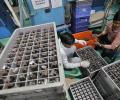
The automobile sector is considered a good indicator of economic health. It has a very long value chain, from primary materials, like metals, glass and plastic, to value-added high-end electronic components, specialised alloys, and software.
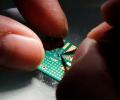
Leading microchip providers Qualcomm and Intel say the chip shortage might last anything between four months to a year, perhaps even two years, depending on the various product categories - mobile devices, ICE, electric vehicles, appliances, data centres. Prakash Mallya, MD, Intel India and vice president, sales and marketing and communications group, said the spike in demand was huge, and cut across segments from PCs, phones, appliances and auto leading to the shortage.
According to the survey report, the government's move to earmark Rs 76,000 crore outlay for semiconductors and display manufacturing segment will aid their production in the country. The survey said that government intervention to boost semiconductors and display manufacturing ecosystem in the country has come at a time when the global economy is facing acute shortage of semiconductors due to severe disruptions in supply chains.

Is self-reliance the right approach in a mega-buck game, or better to be part of a network? asks T N Ninan.
